Nov. 06, 2026
Knit fabrics can be identified by their loop structure, surface texture, stretch direction, edge behavior, and reverse-side appearance. Jersey usually has a smooth face and visibly different reverse, rib has raised vertical columns, interlock looks smooth on both sides, French terry has loops on the reverse, and fleece has a brushed or napped interior.
!
When I identify an unknown knit fabric, I do not rely on one clue. I inspect the face and reverse, feel the surface, stretch the fabric across its width and length, observe the cut edge, and assess its weight and drape. This process is more dependable because a fabric’s commercial name may describe its finish or intended use rather than its actual construction.
Before testing, I place the fabric flat under good light and record five observations: visible loops, surface smoothness, stretch direction, edge movement, and reverse-side structure. I then compare those observations with the construction categories below. A small fabric swatch is sufficient for basic identification, but a larger piece makes stretch, drape, and edge behavior easier to judge.
I identify knit fabric by touch by combining softness with resistance, stretch, thickness, and surface relief. A smooth, lightweight fabric that stretches mainly across the width is often jersey, while a fabric with raised columns is usually rib knit. A dense fabric that feels similar on both sides may be interlock, and a thick fabric with a fuzzy inside is commonly fleece.
Touch alone is not always conclusive because fiber content and finishing can change the hand. A polyester jersey may feel cooler and smoother than cotton jersey, while a brushed cotton blend may feel similar to fleece. For that reason, I use touch as the first screen and confirm the result through stitch appearance, stretch, edge behavior, and reverse-side inspection.
The most common jersey knit fabric texture is a smooth face with fine, repeated vertical columns and a reverse side showing small horizontal or crescent-shaped loops. Single jersey is usually lighter than interlock and often stretches more across the width than along the length. When cut, its edges frequently curl, particularly when the fabric is lightweight or contains a high proportion of stretch fiber.
I commonly find jersey in T-shirts, casual dresses, underwear, lightweight tops, and children’s clothing. Cotton jersey generally feels soft and breathable, polyester jersey often feels smoother and more resilient, and cotton-spandex jersey provides greater recovery after stretching. The fabric’s weight may range from light summer jersey to heavier versions used for structured tops, so fiber content and GSM should be checked separately from the knit structure.
Rib knit fabric identification is usually straightforward because the surface contains raised vertical ribs and recessed channels. The ribs may be narrow, as in 1x1 rib, or broader, as in 2x2 rib, depending on the arrangement of knit and purl columns. Rib fabric stretches substantially across its width and normally returns well when the yarn and finishing are suitable.
I see rib knit most often in cuffs, neckbands, waistbands, fitted tops, socks, and body-hugging garments. Its edges usually do not curl like single jersey because the alternating columns balance the structure. A rib fabric may be lightweight and fine or thick and highly elastic, so the rib ratio, yarn type, and added spandex influence its final performance.
Interlock knit fabric texture is smoother, denser, and more balanced than ordinary single jersey. Both sides can look similar because the construction links two layers of knit loops, producing a stable surface with less obvious face-versus-reverse contrast. Interlock generally feels thicker and more compact, with moderate crosswise stretch and a smoother drape than rib knit.
I use interlock as a likely identification when the fabric has a clean appearance on both sides, does not curl strongly at the edge, and feels heavier than lightweight jersey. It is common in babywear, leggings, dresses, underwear, and premium casual garments. Some interlock fabrics contain spandex, so stretch testing remains necessary before making a final identification.
French terry has a relatively smooth outer face and visible uncut loops on the reverse. Those loops create a textured interior without the dense fuzzy nap found in fleece. The fabric is usually medium weight, has moderate stretch, and provides more absorbency and breathability than a fully brushed sweatshirt fabric made from a similar fiber blend.
I associate French terry with sweatshirts, joggers, lightweight jackets, lounge sets, and children’s garments. When I pull the reverse gently, the looped structure becomes clear, especially under direct light. If the reverse has been heavily brushed, the original loops may be less visible, so I inspect an unbrushed edge or seam allowance when available.
Fleece usually has a smooth or lightly textured face and a brushed, raised, or fuzzy reverse. The brushing traps air and produces a warmer, loftier hand than French terry. Fleece can stretch modestly or substantially depending on whether it is single knit, double knit, or blended with elastane.
I identify fleece by the combination of thickness, soft nap, warmth, and reduced visibility of individual reverse-side loops. It is widely used for sweatshirts, hoodies, blankets, jackets, and cold-weather accessories. A brushed fabric should not be classified only by touch because brushing is a finish; the underlying structure may still be jersey, French terry, or another knit.
Tricot is a warp-knit fabric with a fine, stable surface and relatively low horizontal stretch compared with many weft knits. It may feel smooth, slightly crisp, or silky, and its reverse can show fine diagonal or chain-like lines rather than the more obvious loop columns of jersey. Tricot is common in lingerie, linings, sportswear, swimwear, and technical garments.
When I suspect tricot, I compare its stability with jersey. The fabric often resists laddering and maintains a flatter edge, while jersey is more likely to curl and show a clearer difference between the face and reverse. Close inspection may require magnification because the stitch pattern is fine and can be obscured by dyeing or printing.
Double knits are made from two connected knit layers and usually feel denser and more stable than single-layer jersey. Ponte is a firm double knit with a smooth surface, moderate stretch, strong body, and limited edge curling. Scuba is also dense and smooth, but it often has a springy, slightly spongy hand created by synthetic fibers and compact construction.
I use ponte for trousers, pencil skirts, jackets, and structured dresses because it holds shape better than lightweight jersey. Scuba is common in fitted dresses, skirts, fashion tops, and structured garments where a smooth surface is required. These commercial names do not identify fiber content by themselves; the label or supplier specification must confirm whether the material is polyester, rayon, nylon, elastane, or a blend.
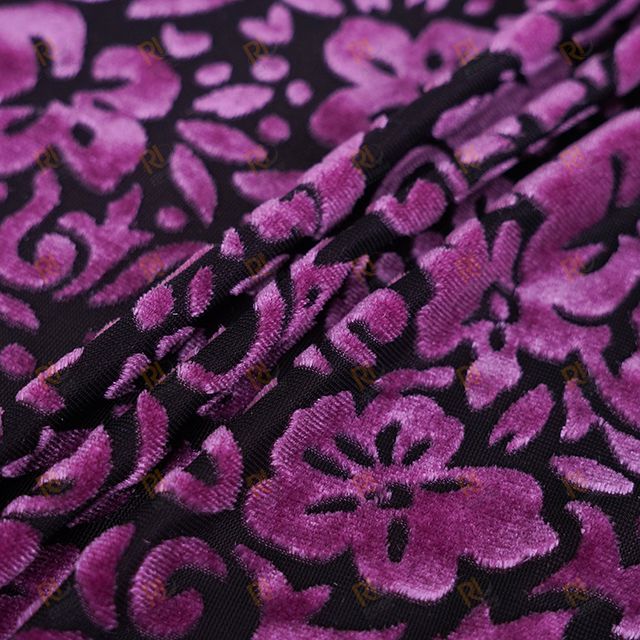
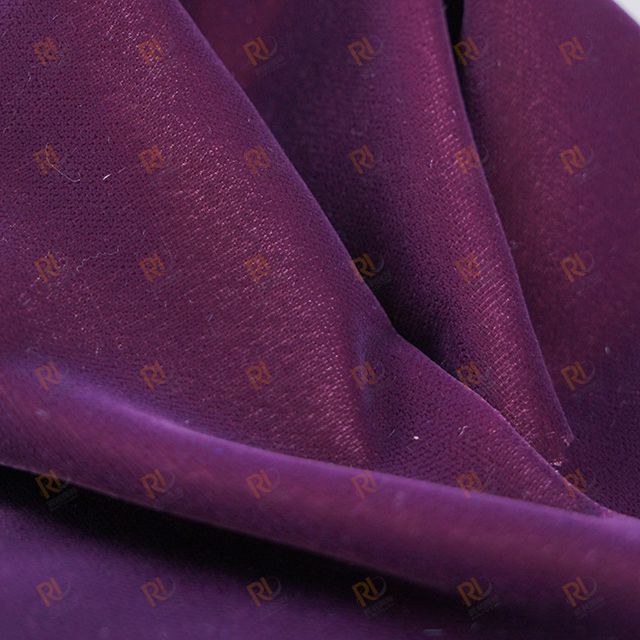
Waffle knit has a recessed square or honeycomb texture that is visible on one or both sides. Pique has a raised geometric texture, often associated with polo shirts, while mesh contains open spaces or a visibly breathable construction. Velour has a short, plush pile that reflects light differently as the surface is brushed in different directions.
Sweater knits are defined less by one universal stitch pattern and more by their heavier yarns, visible loops, soft bulk, and often pronounced drape. They may use jersey, rib, cable, or jacquard structures. I identify them by examining yarn thickness and stitch scale rather than assuming that every thick knit is a specific fiber or construction category.
The main knit fabric vs woven fabric difference is the way yarns are arranged. Knits use interconnected loops, which usually create greater extensibility and softer edge behavior, while woven fabrics use crossing warp and weft yarns, which generally produce a more stable grid. A woven fabric can still contain stretch if elastane is added, and a knit can be stabilized through dense construction or finishing.
| Identification point | Knit fabric | Woven fabric |
|---|---|---|
| Basic structure | Interconnected loops | Crossing warp and weft yarns |
| Typical stretch | Often higher, especially across width | Usually lower unless stretch fiber is added |
| Cut-edge behavior | May curl or roll | More likely to fray or remain flat |
| Surface inspection | Columns, courses, loops, ribs, or mesh | Over-under grid or diagonal weave |
| Common uses | T-shirts, leggings, cuffs, sweatshirts | Shirts, trousers, jackets, curtains |
I avoid identifying fabric solely by stretch because elastane can make woven fabric flexible and finishing can make knit fabric feel firm. Looking at the edge and reverse side usually gives a more reliable distinction. If the fabric has a clear loop system rather than a crossing yarn grid, it is probably knitted.
| Observed texture or behavior | Likely fabric type | Additional confirmation |
|---|---|---|
| Smooth face, different looped reverse, curling edge | Jersey | Moderate width stretch and soft drape |
| Raised vertical columns, strong width stretch | Rib knit | Ribs remain visible when stretched |
| Smooth, dense, similar face and reverse | Interlock | More stable edge and heavier hand than jersey |
| Smooth face with looped reverse | French terry | Reverse loops are unbrushed and visible |
| Smooth face with fuzzy reverse | Fleece | Raised nap and greater thickness |
| Fine, stable surface with low stretch | Tricot | Fine diagonal or chain-like stitch appearance |
| Firm, smooth, structured hand | Ponte or double knit | Limited curling and strong shape retention |
| Open holes or breathable grid | Mesh | Open structure remains visible when stretched |
| Raised square texture | Waffle knit | Repeated recessed cells or ridges |
| Plush, directional surface | Velour | Light changes when the pile is brushed |
Construction, fiber content, finish, and commercial naming are separate properties. Jersey describes a knit construction, cotton describes a fiber, brushed describes a surface treatment, and “performance knit” may be a broad commercial label rather than a technical structure. A fabric can therefore be cotton jersey, polyester brushed jersey, cotton-spandex interlock, or a rayon-blend rib knit.
For buyers sourcing wholesale knit fabric, I recommend requesting the fiber percentage, finished width, GSM, stretch percentage, recovery result, finishing details, and test reports. Runli presents knitted and woven fabrics, yarns, greige fabrics, and dyed or printed materials, with customization options involving yarn count, fabric weight, and dyeing effects. Its published manufacturing information describes spinning, weaving, dyeing, warehousing, and supply services, so buyers should still match the requested knit construction and testing requirements to the specific product specification.
Blended fabrics are the most common source of uncertainty. A cotton-polyester blend may feel softer or smoother than expected, and added spandex can increase stretch without changing the visible stitch structure. I test recovery by stretching a measured 10-centimeter section, releasing it, and checking how closely it returns to the original length after a short rest.
Brushed surfaces can hide loop details, while prints, coatings, and heavy dyeing can alter the hand. When the face is unclear, I inspect the reverse, cut edge, seam allowance, or an unprinted section. If the result affects production, I confirm the fabric through supplier documentation or laboratory testing for fiber composition, GSM, dimensional stability, and stretch recovery.
I choose fabric by matching structure to garment function rather than selecting by softness alone. Lightweight jersey suits close-to-body casual garments, rib supports fitted sections and trims, interlock provides a smoother and more stable surface, French terry suits transitional-weight leisurewear, and fleece supports warmer garments. Ponte and scuba are better candidates when the design needs body, clean lines, and reduced edge curling.
Use this quick selection guide:
How to Identify Different Types of Knit Fabric by Their Texture becomes easier when I examine several connected clues instead of relying on one touch impression. Jersey shows a smooth face, looped reverse, and frequent edge curling; rib has raised columns and strong width stretch; interlock is dense and similar on both sides; French terry has reverse loops; and fleece has a brushed interior.
My next step is always to record the construction, fiber content, weight, drape, stretch, recovery, and finish separately. This prevents commercial names such as “scuba,” “performance knit,” or “sweater knit” from being mistaken for precise technical classifications. For small sewing projects, a careful swatch test may be enough, while wholesale knit fabric purchasing should include supplier specifications and relevant testing documents before bulk production.
Latest News
Nov. 10, 2026
What Makes a Knit Fabric Suitable for Leggings? Stretch, Recovery, and Opacity
Nov. 10, 2026
Flat Back Rib vs Regular Rib Knit: What Are the Differences?
We can Provide Customized Services
The core members of the R&D team consist of 5 members, providing customized services, continuously optimizing the production process, enhancing fabric performance, and promoting product upgrades.
Navigation
Navigation
Contacts
Tel.: +86 181 5753 1007
E-mail: info@runliglobal.com
Add.: Room 4068, Building 4, International Trade Center (Middle District), Keqiao, Shaoxing, Zhejiang,China